class: center, middle # Demo: Aliquot Sum ## Data Analysis with R and Python ### Deepayan Sarkar <h1 onclick='document.documentElement.requestFullscreen();' style='cursor: pointer;'> <svg xmlns='http://www.w3.org/2000/svg' width='16' height='16' fill='currentColor' class='bi bi-arrows-fullscreen' viewBox='0 0 16 16'> <path fill-rule='evenodd' d='M5.828 10.172a.5.5 0 0 0-.707 0l-4.096 4.096V11.5a.5.5 0 0 0-1 0v3.975a.5.5 0 0 0 .5.5H4.5a.5.5 0 0 0 0-1H1.732l4.096-4.096a.5.5 0 0 0 0-.707zm4.344 0a.5.5 0 0 1 .707 0l4.096 4.096V11.5a.5.5 0 1 1 1 0v3.975a.5.5 0 0 1-.5.5H11.5a.5.5 0 0 1 0-1h2.768l-4.096-4.096a.5.5 0 0 1 0-.707zm0-4.344a.5.5 0 0 0 .707 0l4.096-4.096V4.5a.5.5 0 1 0 1 0V.525a.5.5 0 0 0-.5-.5H11.5a.5.5 0 0 0 0 1h2.768l-4.096 4.096a.5.5 0 0 0 0 .707zm-4.344 0a.5.5 0 0 1-.707 0L1.025 1.732V4.5a.5.5 0 0 1-1 0V.525a.5.5 0 0 1 .5-.5H4.5a.5.5 0 0 1 0 1H1.732l4.096 4.096a.5.5 0 0 1 0 .707z'/> </svg> </h1> --- $$ \newcommand{\sub}{_} $$ # Calculating Aliquot Sum * We will compare the speed of some implementations * R using for loop * R using vectorization * C++ through Rcpp --- # The Basic Algorithm .algorithm[ .name[`aliquot\_sum(n)`] __if__ (n < 4) __return__ 1 k = $\lfloor \sqrt{ \texttt{n}} \rfloor$ S = 1 __for__ (i = 2, 3, ..., k) { __if__ (n mod i == 0) { S = S + i + (n/i) } } __if__ (k * k == n) { S = S - k // avoid double counting } __return__ S ] --- # R Implementation: Version 1 using for loop ``` r aliquot_sum_1 <- function(n) { if (n < 4) return(1) k = floor(sqrt(n)) S = 1 for (i in seq(2, k)) if (n %% i == 0) S <- S + i + (n/i) if (k * k == n) S <- S - k S } ``` --- # R Implementation: Version 2 using vectorization ``` r aliquot_sum_2 <- function(n) { if (n < 4) return(1) k <- floor(sqrt(n)) i <- seq(2, k) div <- i[n %% i == 0] S <- 1 + sum(div) + sum(n / div) if (k * k == n) S <- S - k S } ``` --- # R Implementation: Variation of version 2 ``` r aliquot_sum_3 <- function(n) { if (n < 4) return(1) k <- floor(sqrt(n)) i <- seq(2, k) div <- i[n %% i == 0] 1 + sum(div) + sum(n / div) - k * (k * k == n) } ``` --- # R Implementation: Version 4 (direct calculation) ``` r aliquot_sum_0 <- function(n) { if (n == 1) return(1) i <- seq(1, n-1) sum(i[n %% i == 0]) } ``` --- # Check for correctness .scrollable500[ ``` r k <- 1:30 data.frame(v0 = sapply(k, aliquot_sum_0), v1 = sapply(k, aliquot_sum_1), v2 = sapply(k, aliquot_sum_2), v3 = sapply(k, aliquot_sum_3)) ``` ``` v0 v1 v2 v3 1 1 1 1 1 2 1 1 1 1 3 1 1 1 1 4 3 3 3 3 5 1 1 1 1 6 6 6 6 6 7 1 1 1 1 8 7 7 7 7 9 4 4 4 4 10 8 8 8 8 11 1 1 1 1 12 16 16 16 16 13 1 1 1 1 14 10 10 10 10 15 9 9 9 9 16 15 15 15 15 17 1 1 1 1 18 21 21 21 21 19 1 1 1 1 20 22 22 22 22 21 11 11 11 11 22 14 14 14 14 23 1 1 1 1 24 36 36 36 36 25 6 6 6 6 26 16 16 16 16 27 13 13 13 13 28 28 28 28 28 29 1 1 1 1 30 42 42 42 42 ``` ] --- layout: true # Timing comparison --- * R function `system.time()` -- * Argument is the "expression" to be evaluated -- ``` r k <- 1:40000 system.time(v0 <- sapply(k, aliquot_sum_0)) ``` ``` user system elapsed 7.042 3.840 10.989 ``` -- ``` r k[v0 == k] ``` ``` [1] 1 6 28 496 8128 ``` --- ``` r system.time(v1 <- sapply(k, aliquot_sum_1)) ``` ``` user system elapsed 0.970 0.003 0.974 ``` ``` r k[v1 == k] ``` ``` [1] 1 6 28 496 8128 ``` --- ``` r system.time(v2 <- sapply(k, aliquot_sum_2)) ``` ``` user system elapsed 0.389 0.042 0.433 ``` ``` r k[v2 == k] ``` ``` [1] 1 6 28 496 8128 ``` --- ``` r system.time(v3 <- sapply(k, aliquot_sum_3)) ``` ``` user system elapsed 0.369 0.040 0.409 ``` ``` r k[v3 == k] ``` ``` [1] 1 6 28 496 8128 ``` --- * How large can we go? ``` r k2 <- 1:1e6 # 10^6 = 1 million system.time(v <- sapply(k2, aliquot_sum_3)) ``` ``` user system elapsed 16.473 1.131 17.669 ``` ``` r k2[v == k2] ``` ``` [1] 1 6 28 496 8128 ``` --- layout: false # C / C++ Implementation: For even better performance ```c int aliquot_sum_4(int n) { if (n < 4) return 1; int k = floor(sqrt(n)); int S = 1; for (int i = 2; i <= k; i++) { if (n % i == 0) S = S + i + (n/i); } if (k * k == n) S = S - k; return S; } ``` --- # R can easily interface to C++ through Rcpp ``` cpp #include <Rcpp.h> // [[Rcpp::export]] int aliquot_sum_4(int n) { if (n < 4) return 1; int k = floor(sqrt(n)); int S = 1; for (int i = 2; i <= k; i++) { if (n % i == 0) S = S + i + (n/i); } if (k * k == n) S = S - k; return S; } ``` --- # Using Rcpp compiled code from R ``` r k2 <- 1:1e6 # 10^6 = 1 million system.time(w6 <- sapply(k2, aliquot_sum_4)) ``` ``` user system elapsed 2.268 0.016 2.295 ``` ``` r k2[w6 == k2] ``` ``` [1] 1 6 28 496 8128 ``` --- layout: true # Timing for large inputs --- ``` r system.time(aliquot_sum_4(33550336) |> print()) ``` ``` [1] 33550336 ``` ``` user system elapsed 0 0 0 ``` --- ``` r system.time(aliquot_sum_3(33550336) |> print()) ``` ``` [1] 33550336 ``` ``` user system elapsed 0 0 0 ``` ``` r system.time(aliquot_sum_1(33550336) |> print()) ``` ``` [1] 33550336 ``` ``` user system elapsed 0.001 0.000 0.001 ``` -- ``` r system.time(aliquot_sum_0(33550336) |> print()) ``` ``` [1] 33550336 ``` ``` user system elapsed 0.859 0.185 1.047 ``` --- layout: false # Application: Aliquot Sum Sequence * For integer $N$, define * $a_0 = N$ * $a\sub{i+1} = \texttt{aliquot_sum}(a\sub{i})$ for $i \geq 0$ * How does this sequence behave? --- # Simple implementation ``` r aliquot_seq <- function(n, length = 25) { ans <- c(n, numeric(length)) for (i in 1:length) ans[i+1] <- aliquot_sum_4(ans[i]) ans } ``` --- layout: true # Examples --- ``` r plot(aliquot_seq(190), type = "o") ``` 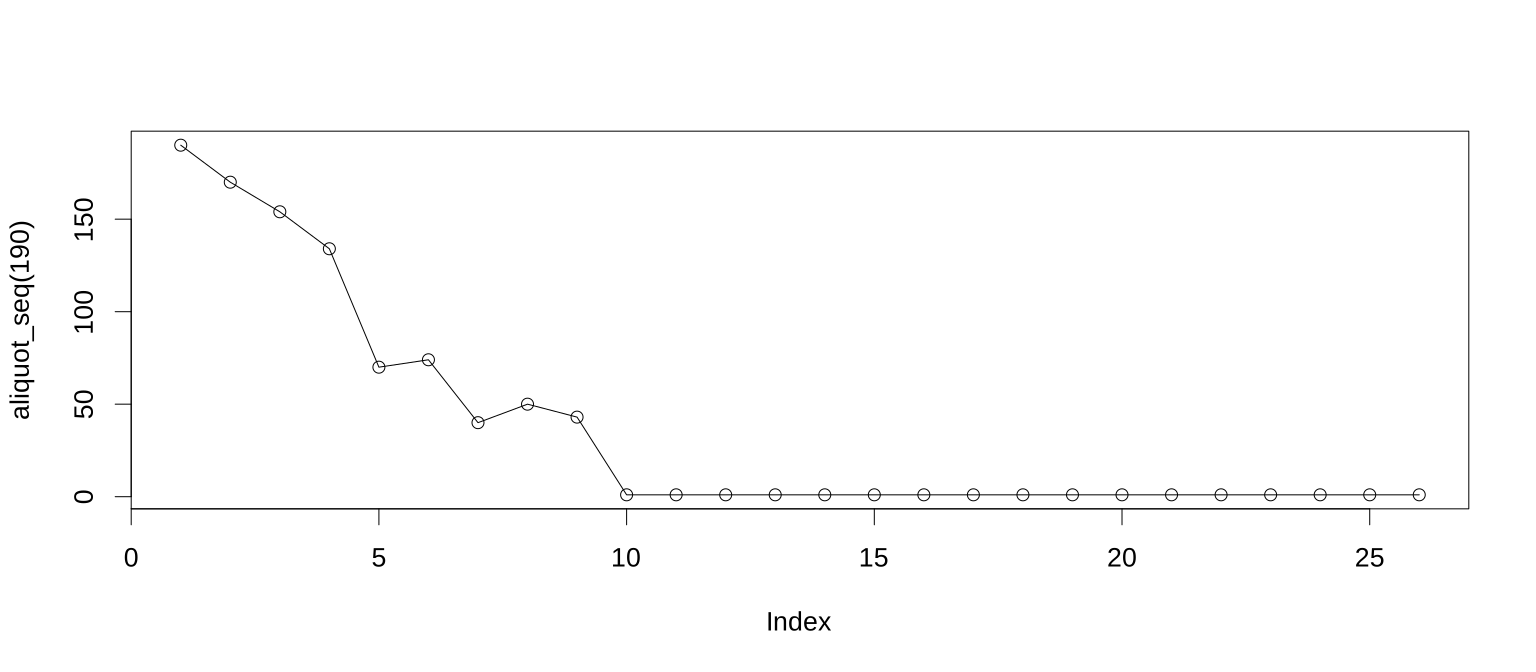 --- ``` r plot(aliquot_seq(200), type = "o") ``` 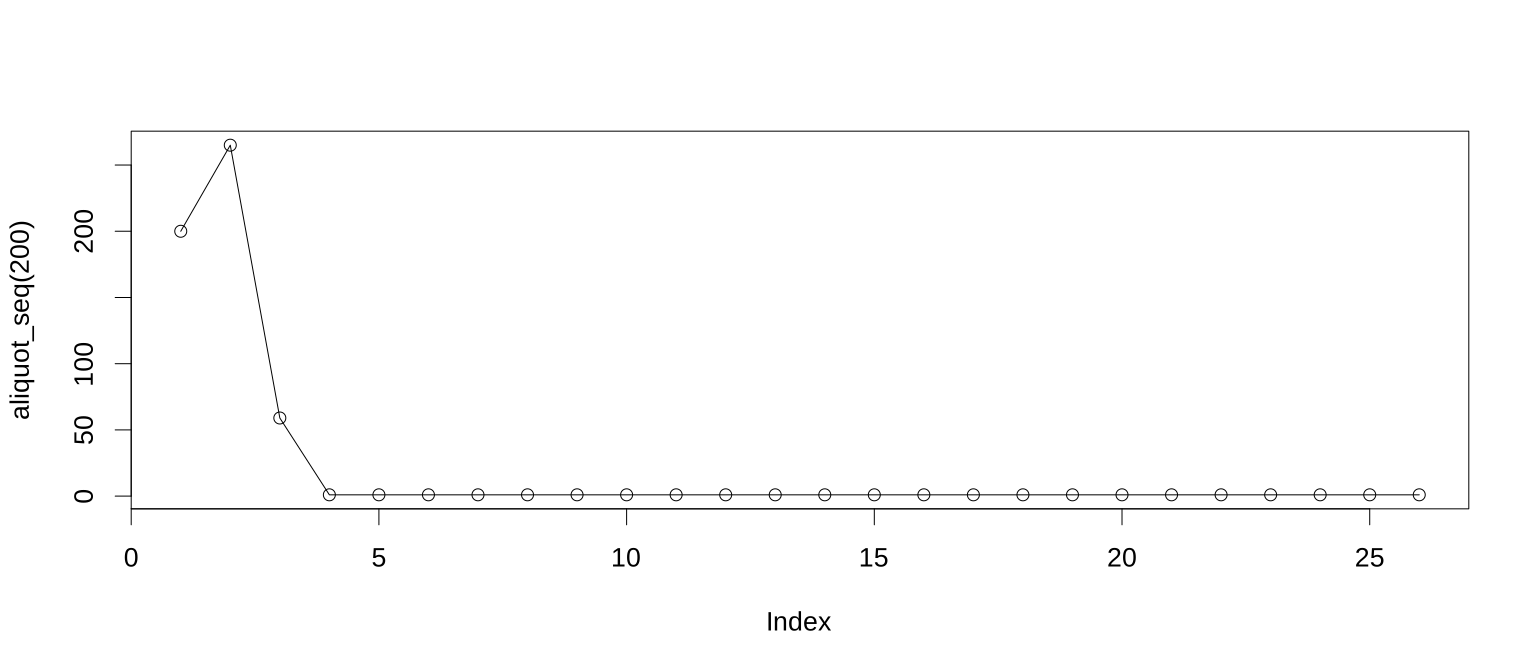 --- ``` r plot(aliquot_seq(220), type = "o") ``` 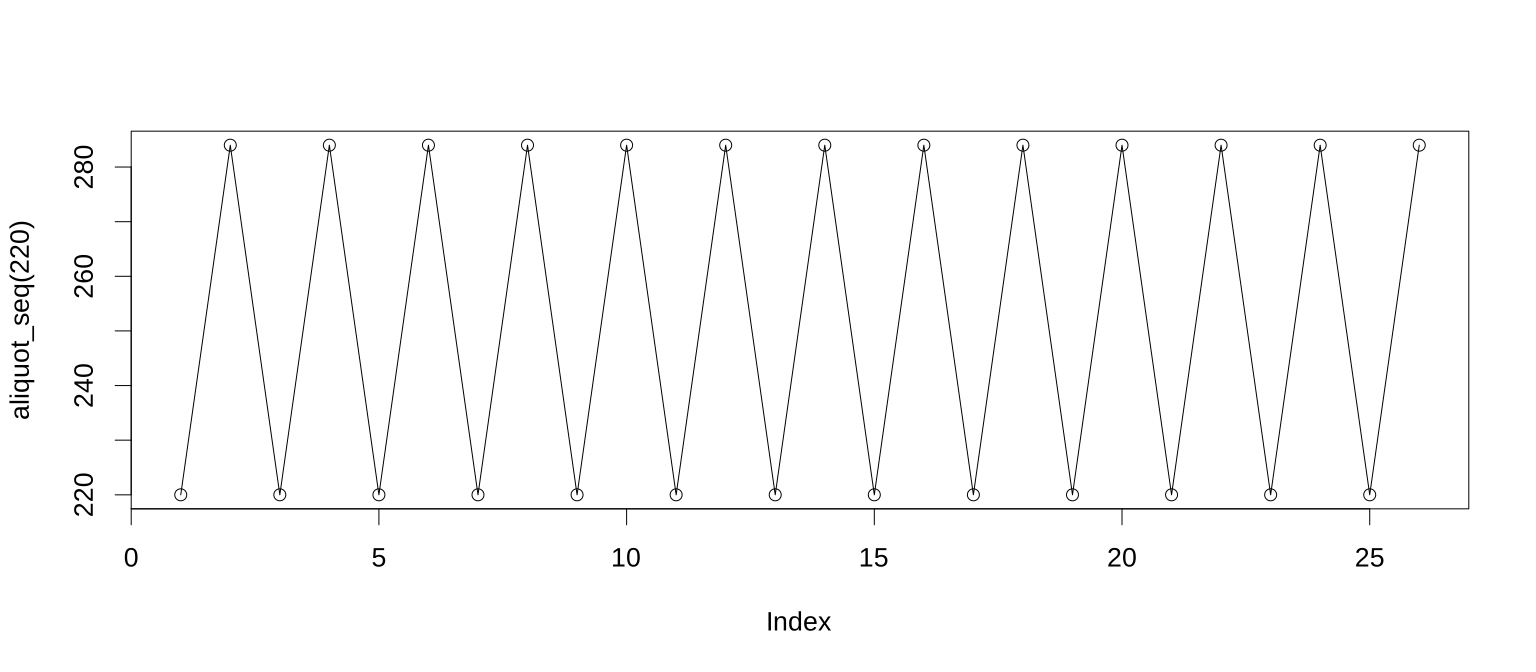 --- ``` r plot(aliquot_seq(222), type = "o") ``` 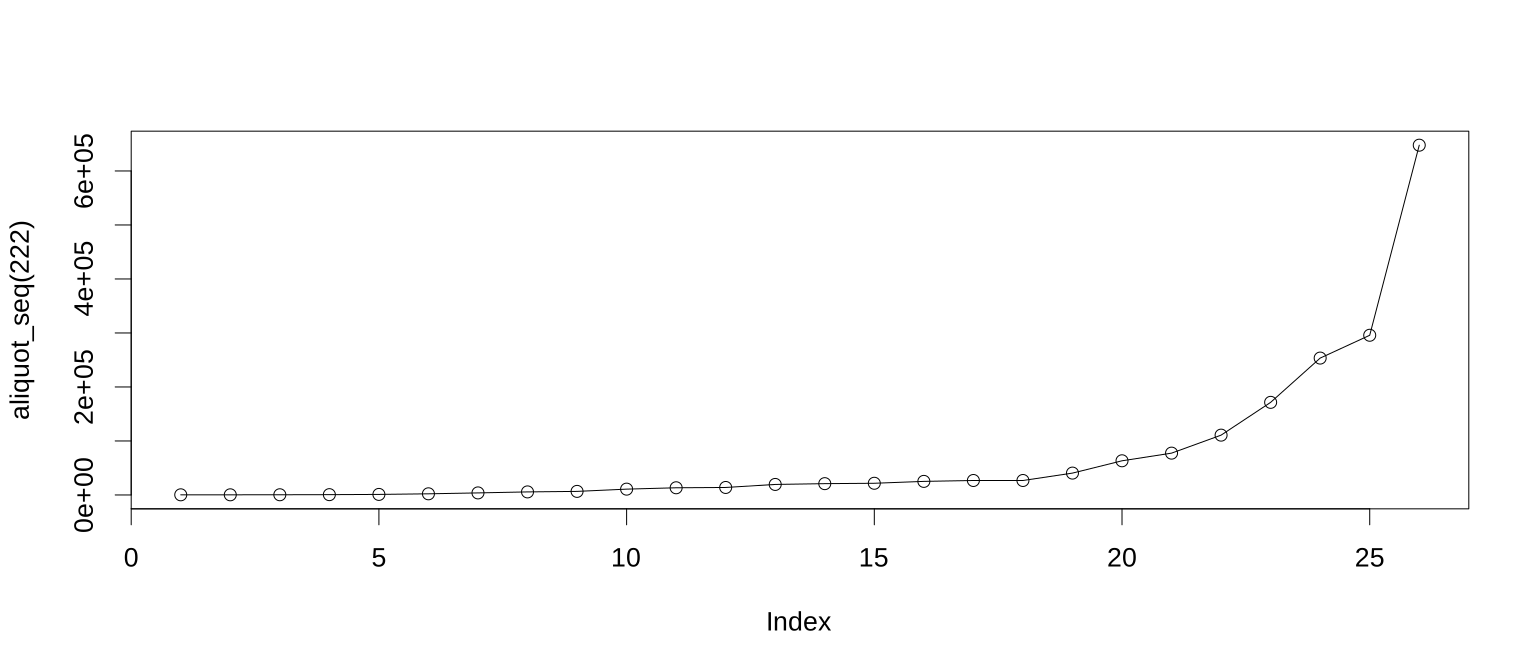 --- ``` r plot(aliquot_seq(224), type = "o") ``` 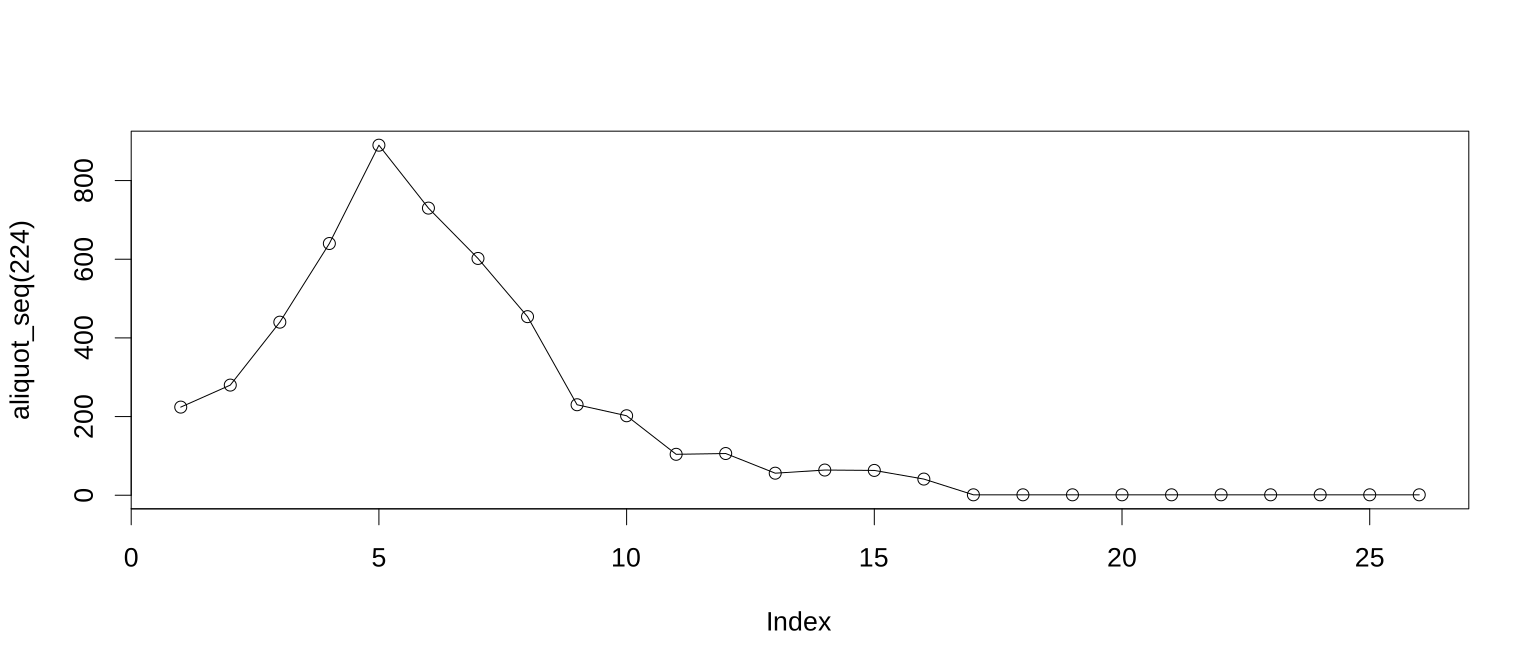 --- * Look for interesting ones ``` r for (i in 10:1000) if (aliquot_seq(i, 100)[100] > 1000) print(i) ``` ``` [1] 138 [1] 150 [1] 168 [1] 222 [1] 234 [1] 312 [1] 528 [1] 570 [1] 726 [1] 870 [1] 960 ``` --- ``` r plot(aliquot_seq(960), type = "o") ``` 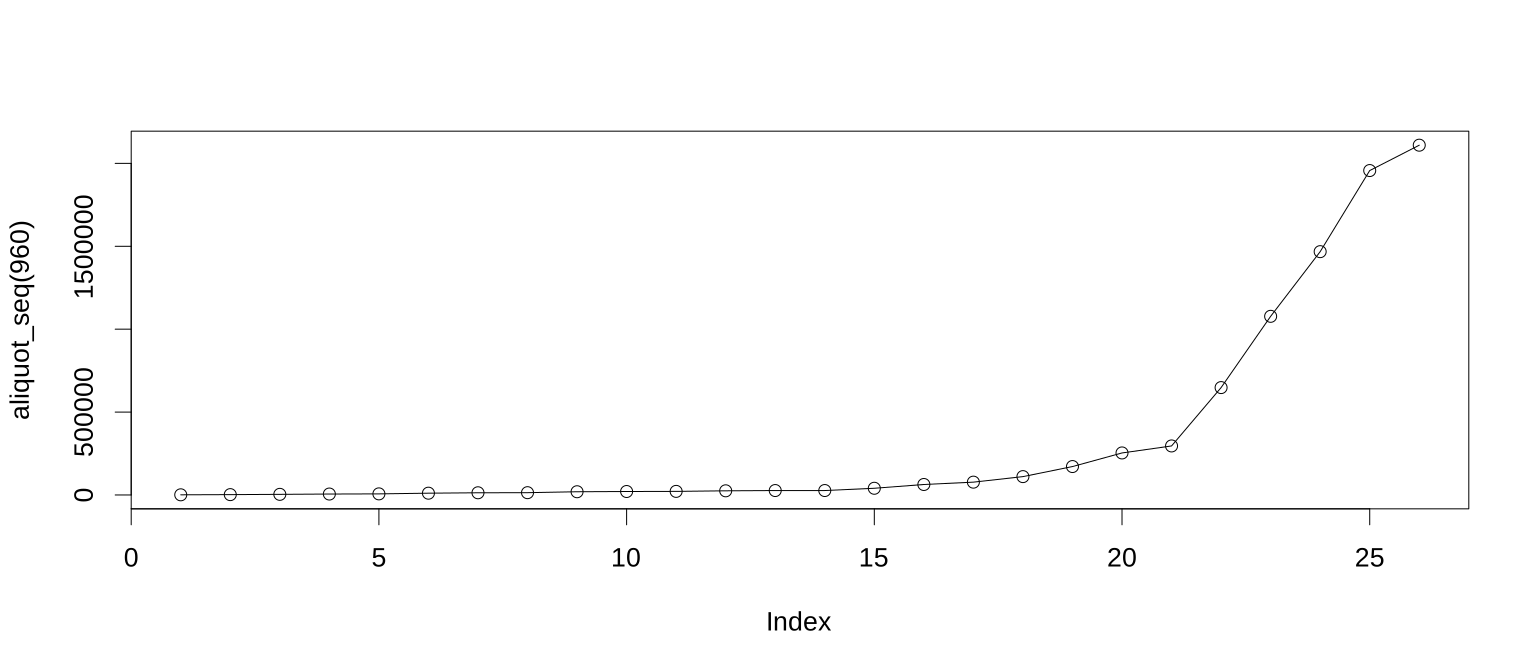 --- ``` r plot(aliquot_seq(960), type = "o", log = "y") ``` 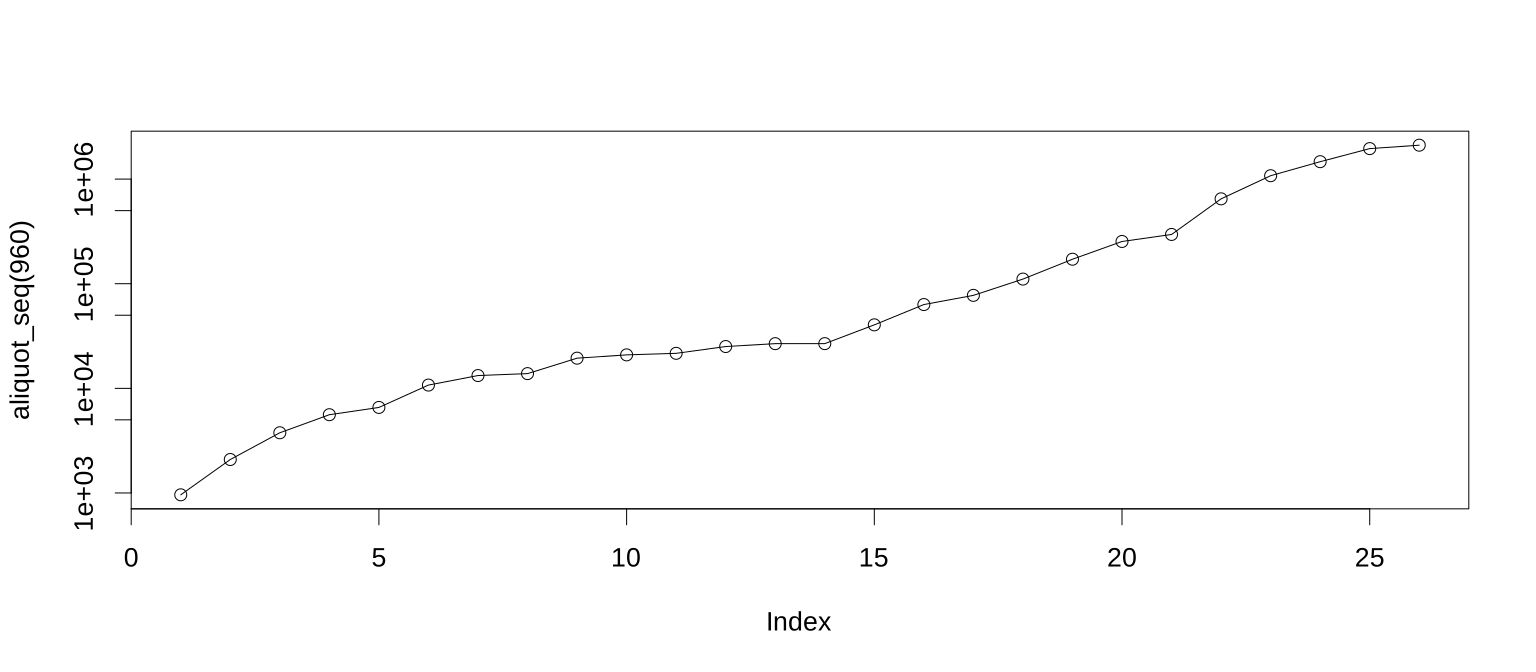 --- ``` r plot(aliquot_seq(870), type = "o", log = "y") ``` 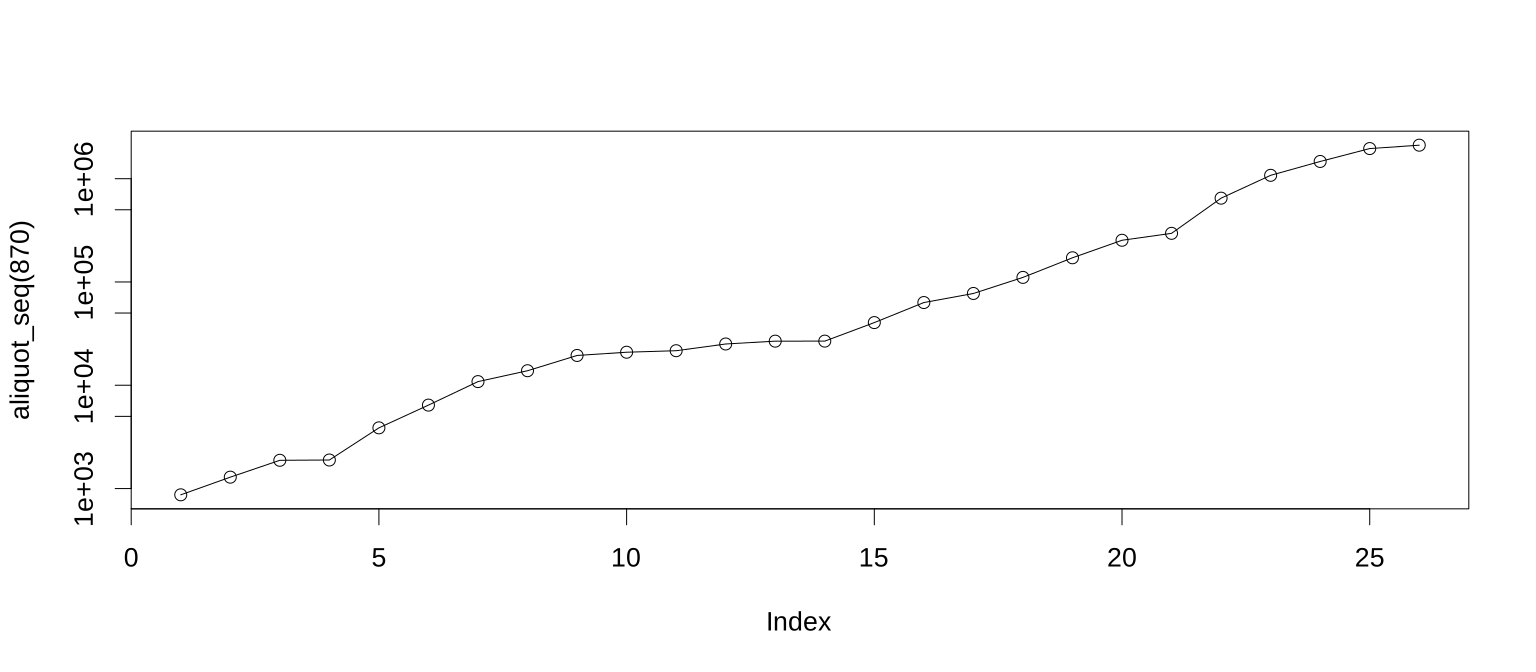 --- ``` r plot(aliquot_seq(726), type = "o", log = "y") ``` 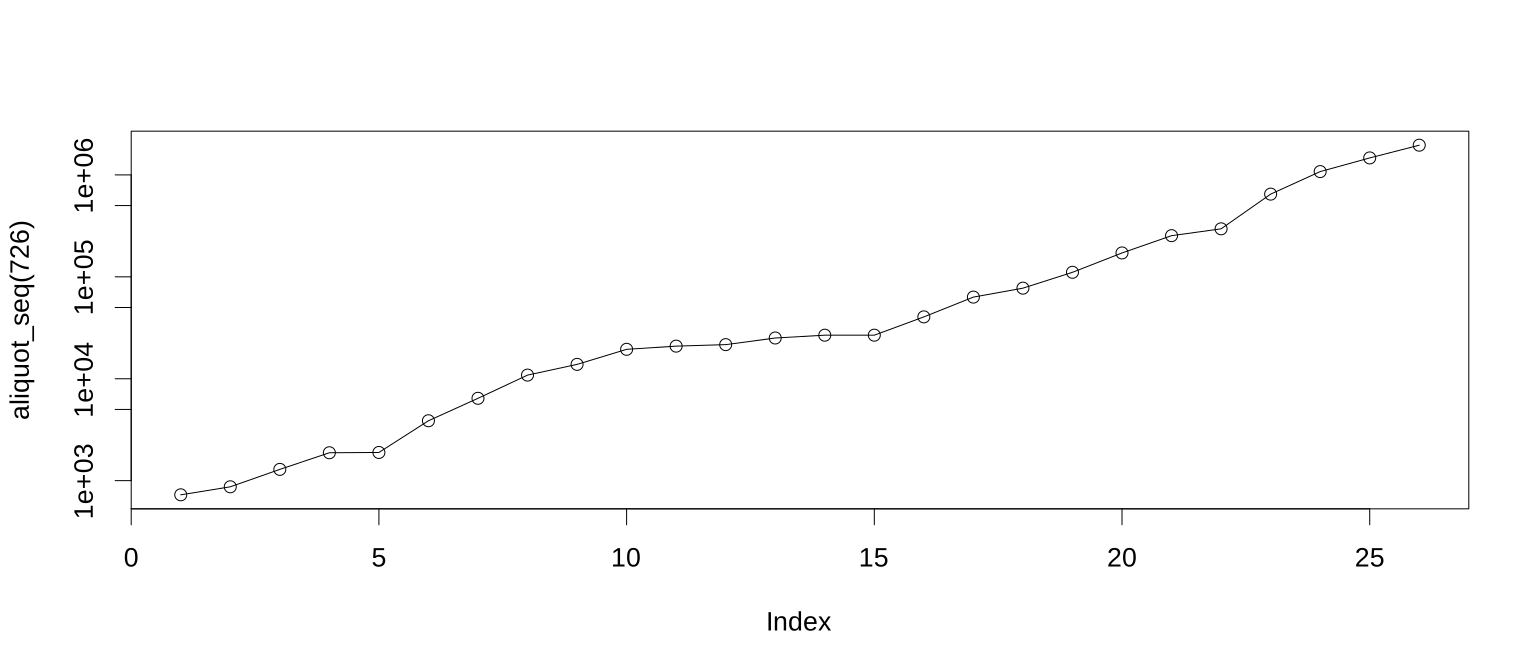 --- ``` r plot(aliquot_seq(570), type = "o", log = "y") ``` 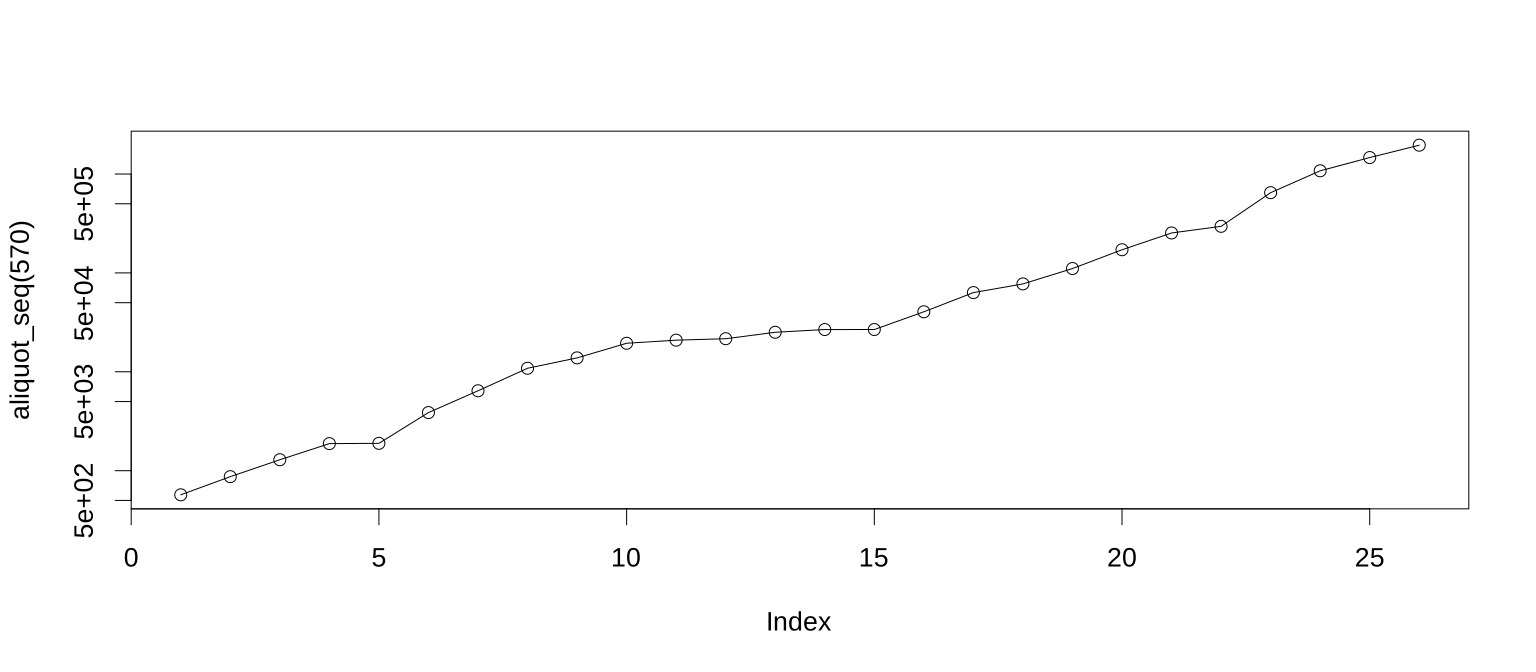 --- ``` r plot(aliquot_seq(528), type = "o", log = "y") ``` 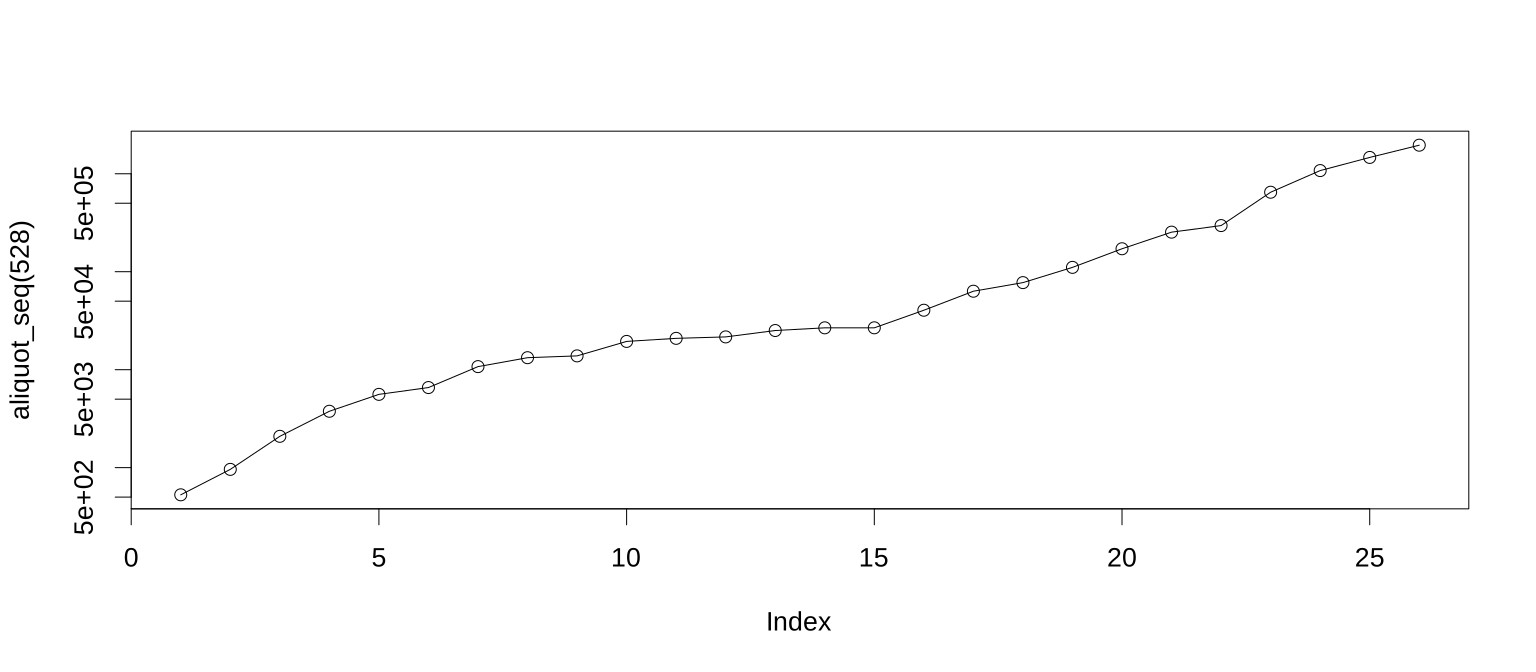 --- ``` r plot(aliquot_seq(312), type = "o", log = "y") ``` 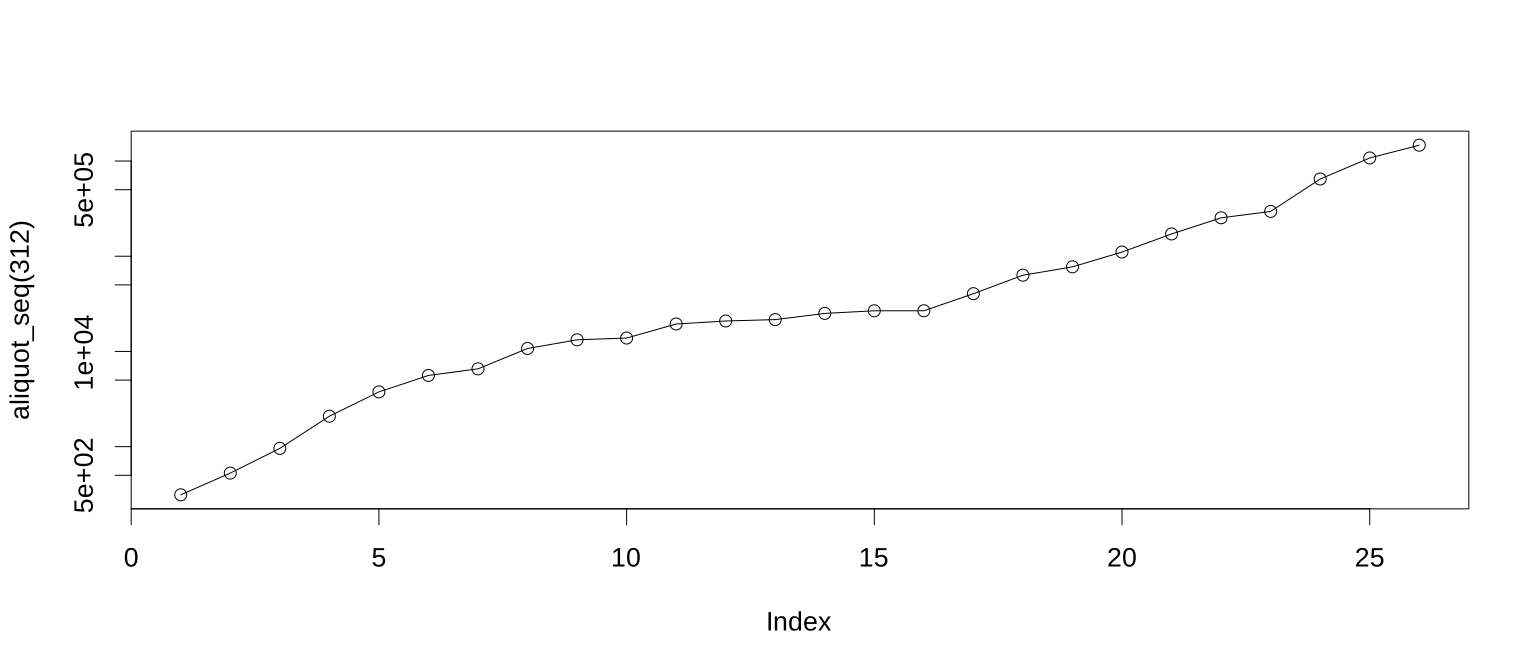 --- ``` r plot(aliquot_seq(138, 100), type = "o", log = "y") ``` 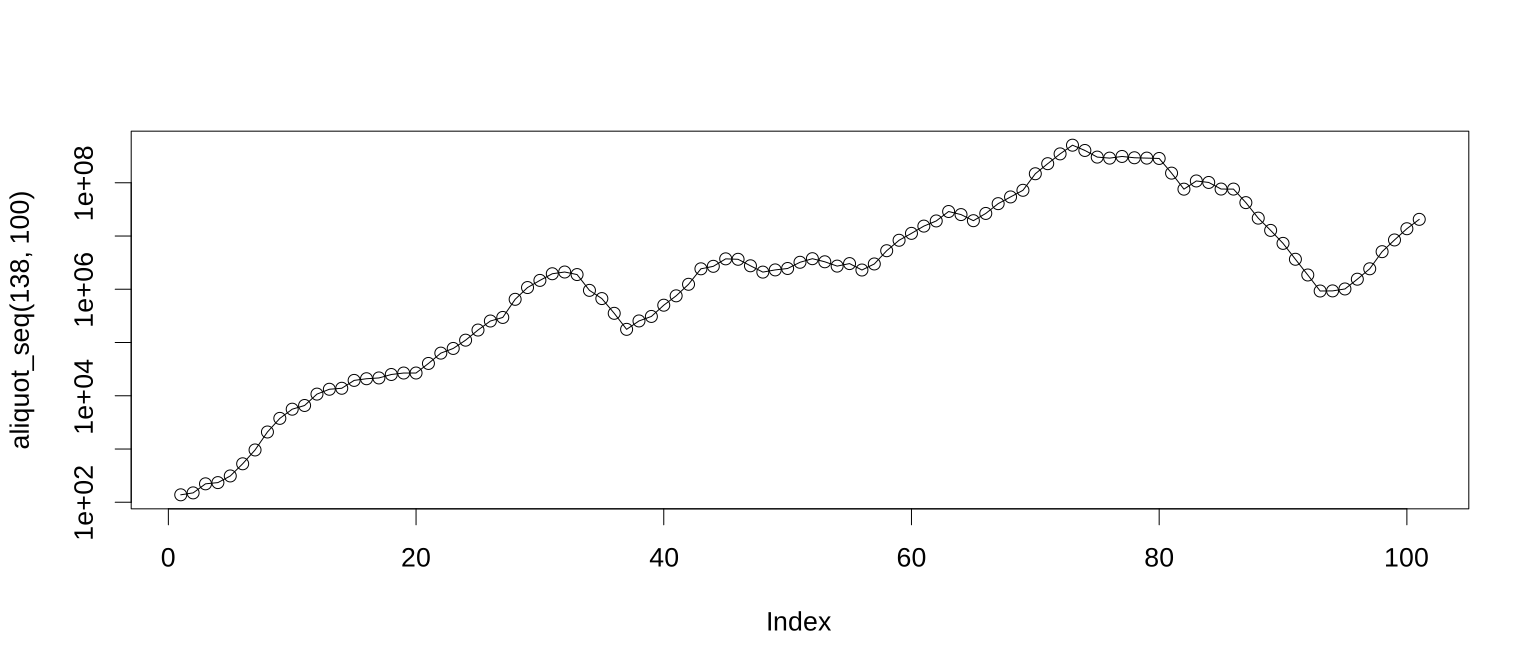 --- ``` r plot(aliquot_seq(276, 100), type = "o", log = "y") ``` ``` Warning in xy.coords(x, y, xlabel, ylabel, log): 1 y value <= 0 omitted from logarithmic plot ``` 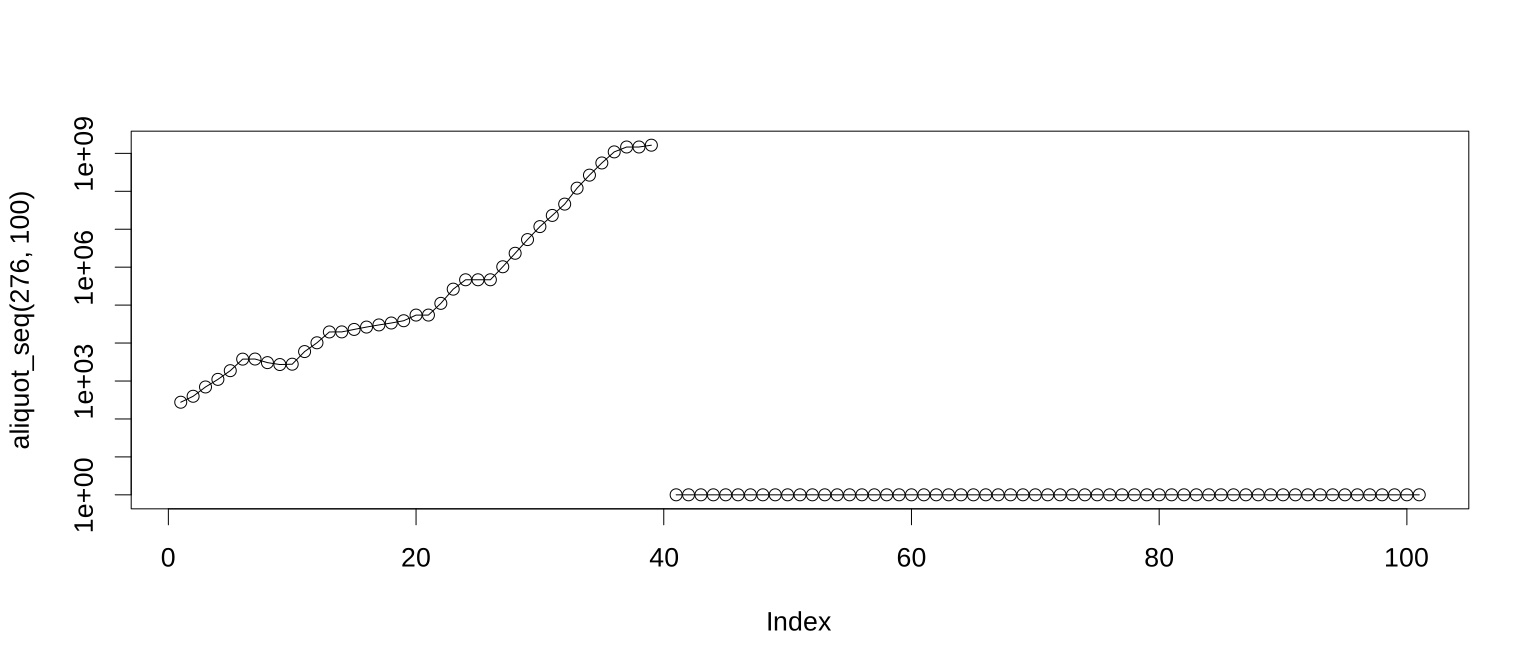 --- ``` r aliquot_seq(276, 50) ``` ``` [1] 276 396 696 1104 1872 3770 [7] 3790 3050 2716 2772 5964 10164 [13] 19628 19684 22876 26404 30044 33796 [19] 38780 54628 54684 111300 263676 465668 [25] 465724 465780 1026060 2325540 5335260 11738916 [31] 23117724 45956820 121129260 266485716 558454764 1092873236 [37] 1470806764 1471882804 1642613196 -1557278412 1 1 [43] 1 1 1 1 1 1 [49] 1 1 1 ``` -- * How can we fix this? --- layout: false class: center middle # If you want to learn more about this... <iframe width="840" height="472" src="https://www.youtube.com/embed/OtYKDzXwDEE?si=vlpuB6eYglqceGUa" title="YouTube video player" frameborder="0" referrerpolicy="strict-origin-when-cross-origin" allowfullscreen></iframe>